
What is the e-Invoice (e-Fatura)?
The e-Invoice is the name given to invoices created with the application that lets invoices be created and stored electronically. An e-Invoice has the same legal status as a paper invoice.
- Fully compliant with current legislation
- Integrated with more than ten integrators
- Customisable e-Invoice templates make it easy to create the visual designs you want
Because the validity and accuracy of invoices created with the e-Invoice application are ensured by a financial seal, e-Invoices have no validity when printed on paper. Users must keep the e-Invoices they issued and accepted for the periods set out in legislation, and must present them when required.
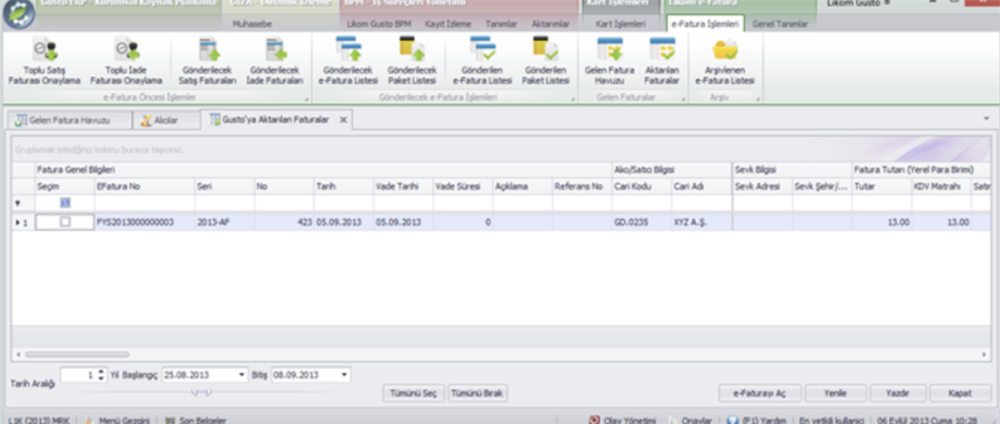
How can it be used?
There are three methods:
- The e-Invoice Portal
- Integrating the company's IT systems with the Revenue Administration's system
- Through the systems of organisations with special integration permission from the Administration
Who must use the e-Invoice?
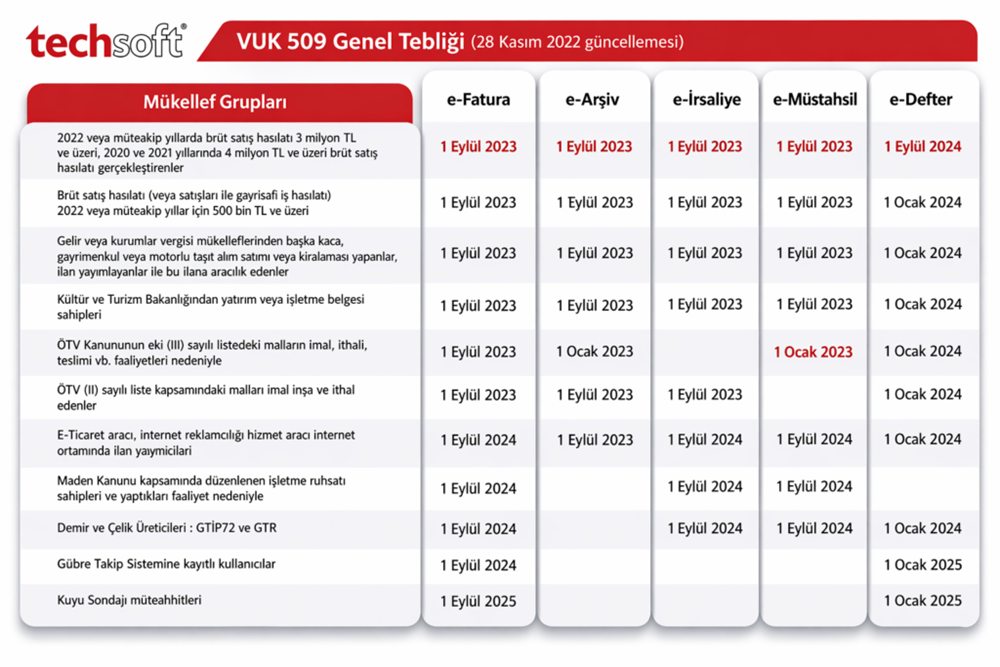
Under Tax Procedure Law General Communiqué No. 509 published by the Turkish Revenue Administration (28 November 2022 update), the e-Invoice is mandatory for the taxpayer groups below.
Mandatory by turnover
- Gross sales revenue of TRY 3 million or more in 2022 or later years
- Gross sales revenue of TRY 4 million or more in 2020 and 2021
Transition date: 1 September 2023
Lower turnover threshold (extended scope)
- Gross sales revenue of TRY 500 thousand or more in 2022 or later years
Transition date: 1 September 2023
E-commerce and digital platforms
- Those offering online property or vehicle sales or rental services
- Companies publishing listings or acting as intermediaries on these platforms
Transition date: 1 September 2023
Tourism sector
- Companies with an investment or operating certificate from the Ministry of Culture and Tourism
Transition date: 1 September 2023
Companies subject to Special Consumption Tax (ÖTV)
- Those manufacturing, importing or delivering goods on ÖTV list (III)
Transition date: 1 September 2023
ÖTV list (II)
- Those manufacturing, building or importing goods on ÖTV list (II)
Transition date: 1 September 2023
E-commerce intermediary service providers
- Platforms acting as intermediaries for online advertising and sales
Transition date: 1 September 2024
Mining sector
- Companies with a mining licence and production activity
Transition date: 1 September 2024
Iron and steel sector
- Producers within GTIP 72 and GTIP 73
Transition date: 1 September 2024
Users of the Fertiliser Tracking System
Transition date: 1 September 2024
Well drilling contractors
Transition date: 1 September 2025